
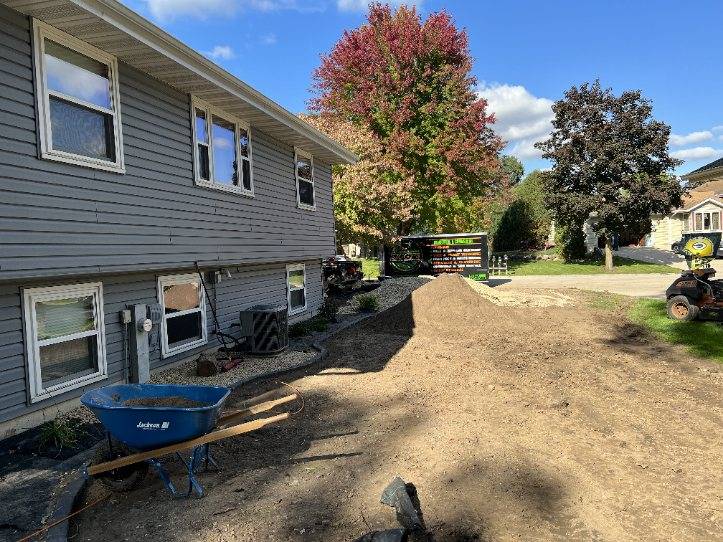
The Short Answer: It Usually Comes Down to Finish Grading
Finish grading errors can turn your new construction yard into a muddy mess. Learn the causes, drainage fixes, and pro solutions so you can reclaim your lawn fast. If you moved into a brand new home and your lawn area looks like a swamp after every rain, you are not alone. The most common reason is improper finish grading that fails to move water away from your house and across the yard the way it should. In Southeastern Wisconsin, where dense clay soils hold water longer, even small grading mistakes can create big problems. The good news is that the right corrections can dry out your lot, protect your foundation, and set you up for a healthy lawn.
What Finish Grading Actually Is
Finish grading is the precise shaping of the top layer of soil so water flows in the right direction and the surface is ready for seed or sod. It is the last shaping step before lawn installation. While rough grading happens earlier in construction to establish general elevations, finish grading creates smooth, even contours with the correct slope away from the home. It also sets topsoil depth and prepares the seedbed so grass can root well.
Rough Grading vs. Finish Grading
Rough grading uses heavy equipment to move fill dirt and set broad elevations. It often leaves a hard, uneven surface and does not focus on soil quality. Finish grading is lighter, more detailed work. It blends in quality topsoil, sets final slopes, eliminates low spots, and creates a firm but not compacted surface. If your builder skipped or rushed finish grading, your yard may have shallow topsoil, compacted subsoil, or the wrong pitch near the foundation. Any of these issues can lead to standing water and mud.
What a Proper Grade Looks Like
A properly graded yard has a gentle slope away from the house. Aim for about 2 percent grade for at least the first 10 feet from your foundation. That means a drop of roughly 2.4 inches over 10 feet. In many Southeastern Wisconsin neighborhoods with clay-heavy soils, you may benefit from a slightly stronger pitch and well defined drainage paths called swales that carry water across the lot to a safe outlet. The surface should be smooth to mow, but not polished tight. It should have enough texture to accept seed and hold moisture without creating puddles.
Common Causes of a Muddy New Construction Yard
Compacted Subsoil From Heavy Equipment
During construction, trucks and machinery drive across your lot. The weight crushes soil structure and creates a hardpan layer that water cannot pass through. When topsoil is spread on top of this sealed layer without loosening, water can only sit and form mud.
Not Enough Topsoil or a Poor Soil Mix
Healthy lawns need 4 to 6 inches of quality topsoil over the subsoil. Many new builds receive a thin skim layer, sometimes mixed with subsoil or fill that lacks organic matter. Thin, low quality topsoil saturates fast and turns to muck during rain.
Incorrect Slope Around the Foundation
If your yard is flat or pitched toward the home, water flows the wrong way and can collect near the foundation. This risks basement seepage, icy spots in winter, and constant mud near walkways and patios.
Gutter and Downspout Problems
Short downspouts that dump water right at the base of your home create erosion and muddy zones. Clogged gutters, missing splash blocks, or high volume roof lines concentrate water in a few spots and overwhelm the soil.
Overwatering or New Irrigation Settings
New lawns need moisture to establish, but too much water floods the surface. Automatic irrigation that runs too long or too often can make a new lawn feel like a sponge that never dries.
Neighboring Lot Drainage and Site Low Spots
Water does not stop at your property line. If nearby lots send runoff your way or a natural depression sits in your yard, water will pool. Without a planned route out, it becomes a persistent mud zone.
Clear Signs Your Yard Needs Finish Grading
- Puddles remain more than 48 hours after rain.
- Water flows toward the foundation or collects against hardscapes.
- Thin or struggling grass, especially along the house and in pathways.
- Ruts and soft footprints that never seem to firm up.
- Exposed subsoil or mixed layers where topsoil is too thin.
- Mud tracked onto patios, driveway edges, or garage floors.
- Sediment streaks after storms that show water movement across bare soil.
Drainage Fixes That Work
Correct the Grade
- Map the water: After a rain, walk the yard and mark puddle edges and flow paths.
- Set target elevations: Plan a 2 percent slope away from the house for at least 10 feet.
- Add or remove soil: Bring in quality screened topsoil to build up low areas. Lightly cut down obvious high spots that trap water.
- Blend layers: Before adding topsoil, loosen compacted subsoil several inches to help the layers bond and drain.
- Fine grade: Rake and smooth the surface so water sheds in a gentle, even sheet rather than channeling randomly.
Improve Soil Structure
- Mix in compost to boost organic matter and improve infiltration. Aim for a 2 to 3 inch layer tilled into the top 4 to 6 inches.
- Consider gypsum for clay soils if a soil test suggests it may help soil structure. It does not replace organic matter, but it can support better aggregation.
- Avoid adding straight sand to clay. Sand plus clay can make a cement-like mix unless you add very large volumes and balance with organic matter.
- Plan for long term: Topdress with compost once a year to keep soil healthier and reduce future compaction.
Direct Roof Water Away
- Extend downspouts 6 to 10 feet away from the foundation.
- Add splash blocks or outlet diffusers to slow erosion at the discharge point.
- For problem areas, bury a solid pipe from the downspout to a safe daylight point or a dry well placed far from the house.
Build Simple Drainage Features
- Swales: Shallow, grassed channels that carry water across the yard without erosion.
- French drains: Perforated pipe wrapped in fabric and stone, used when water needs to move through soil that drains poorly.
- Rain gardens: Planted depressions with deep rooted natives that hold and filter runoff while adding beauty.
- Dry creek beds: Decorative stone features that hide a swale or channel and protect against washouts.
Stabilize the Surface After Finish Grading
- Erosion control blankets on slopes to keep seed and soil in place.
- Clean straw mulch to protect new seed and help moisture retention.
- Sod on steep slopes or high traffic zones to lock down soil right away.
Seed vs. Sod After Finish Grading
Both seed and sod can succeed once finish grading is corrected. Your choice depends on timeline, budget, and maintenance plans. Seed costs less and allows a custom mix suited to sun, shade, and soil conditions. It takes longer to fill in and needs careful watering. Sod costs more up front but gives instant cover and reduces mud and erosion immediately. It still needs proper watering and time to root, but the yard can be usable sooner.
- Choose seed if you want the best value, can water consistently, and can wait several weeks for full coverage.
- Choose sod if you need fast stabilization, have slopes, or want a near-instant green yard once grading is complete.
A Simple Homeowner Checklist
- Check the slope around your foundation with a string level or a 2x4 and level. Confirm you have at least 2 percent pitch away from the house.
- Probe topsoil depth. You want 4 to 6 inches of true topsoil above the subsoil. If you hit hardpan right below the surface, you likely need more topsoil and subsoil loosening.
- Test infiltration by digging a 6 inch deep hole, filling it with water, and timing how fast it drains. Very slow drainage points to compaction or heavy clay that needs soil improvement and better grading.
- Inspect gutters and downspouts. Clean them, add extensions, and check for leaks at joints.
- Walk the yard after a steady rain to watch where water moves. Note problems with photos for your contractor.
- Call 811 before any digging to mark utilities if you plan to add drains or change grades.
- Talk to a local pro about finish grading, especially if you see water near the foundation or across property lines.
Why Work With Ziggy's Landscape in Southeastern Wisconsin
Ziggy's Landscape is a local team dedicated to building healthy, functional outdoor spaces in Walworth and Jefferson counties. We understand how Southeastern Wisconsin’s glacial soils behave in spring thaws, summer storms, and winter freeze cycles. That local knowledge matters when you need accurate finish grading and drainage that lasts. Our services include finish grading for proper drainage, new lawn installation with seed or sod, regular mowing, mulch application, seasonal clean ups in spring and fall, and snow removal. We tailor each plan to your property, budget, and goals, and we stand behind our work with friendly, reliable service.
Our Process for Finish Grading and Drainage
- Site assessment: We walk the property after rain when possible, identify water paths, and pinpoint low spots and compaction.
- Laser-guided elevations: We set accurate reference points to create the right slope away from structures and toward safe outlets.
- Subsoil relief: We loosen compacted areas so water can move through the profile instead of sitting on top.
- Soil improvement: We bring in quality screened topsoil and blend in compost as needed for strong root growth.
- Precise finish grading: We shape smooth, mowable surfaces with consistent pitch and clean transitions.
- Drainage solutions: We add downspout extensions, swales, French drains, or rain gardens based on your site needs.
- Stabilization and lawn install: We seed with erosion control or lay sod, then set a watering and care plan.
- Follow up: We check progress, adjust irrigation guidance, and schedule maintenance as the lawn establishes.
Transparent Pricing and Timelines
Every lot is different, so we provide clear, itemized proposals before work begins. We explain the scope, from soil volumes to drainage components, and set a timeline that fits your schedule. Ziggy's Landscape can often complete finish grading and a basic lawn install within a few days, depending on weather and the size of your yard. More complex drainage features may add a bit of time, but they save you headaches for years to come.
New Construction Packages
- Finish grading and seed with erosion control for budget-friendly establishment.
- Finish grading and sod for fast stabilization and instant curb appeal.
- Downspout extensions and swale shaping to manage roof runoff.
- Mulch and bed edging to protect soil and frame new plantings.
- Starter maintenance plan with mowing, watering guidance, and seasonal clean ups.
DIY or Hire a Pro
Some grading touch-ups are manageable for handy homeowners, especially small low spots far from the house. If you choose to DIY, bring in quality topsoil, avoid working wet soil, and check slopes with a level. For anything near the foundation, for larger drainage issues, or when compaction is severe, hire a professional. Accurate finish grading needs the right tools, soil knowledge, and careful execution. A small mistake can push water the wrong way. Ziggy's Landscape can assess your site and recommend the best mix of grading, soil improvement, and drainage features that fit your budget and timeline.
Frequently Asked Questions About Finish Grading
When is the best time to grade in Wisconsin?
The best window is spring after the ground thaws through early fall, when soils are workable but not saturated. Avoid grading when soil is very wet or frozen. Working wet soil leads to compaction and clods that set you back.
How much slope do I need away from my house?
Around 2 percent for the first 10 feet is a good standard, which is about a quarter inch drop per foot. On heavy clay sites, consider stronger pitch and well defined swales to move water to a safe outlet.
How much topsoil should I have before seeding or sodding?
Plan for 4 to 6 inches of quality topsoil after finish grading. If you have less, your lawn will struggle in heat and heavy rain, and mud will be more common.
Can grading alone fix standing water?
Sometimes yes, especially when the issue is a shallow depression. If compaction is severe or a neighboring lot drains toward you, you may need a combination of finish grading and a drainage feature like a swale or French drain.
Will sod solve my mud problem without grading?
No. Sod needs proper grade and soil contact to root and drain. Laying sod over a poorly graded, compacted surface only hides the problem for a short time. Correct finish grading first.
How long until I can mow a new lawn after grading?
For seeded lawns, wait until the grass reaches 3 to 3.5 inches, then mow to about 2.5 to 3 inches with sharp blades. For sod, wait about 10 to 14 days in warm weather, or until the sod resists a gentle tug, then mow high for the first few cuts.
Ready to Reclaim Your Lawn?
Your new construction yard does not have to stay muddy. With correct finish grading, healthier soil, and smart drainage, you can protect your home and enjoy a clean, usable lawn. Ziggy's Landscape serves Walworth and Jefferson counties with expert finish grading, new lawn installation, and year round care. If you are tired of puddles, soft spots, and tracked-in mud, reach out to Ziggy's Landscape. We will assess your site, share clear recommendations, and deliver a yard that drains, looks great, and stays that way. It starts with a proper plan and it ends with a lawn you love.