
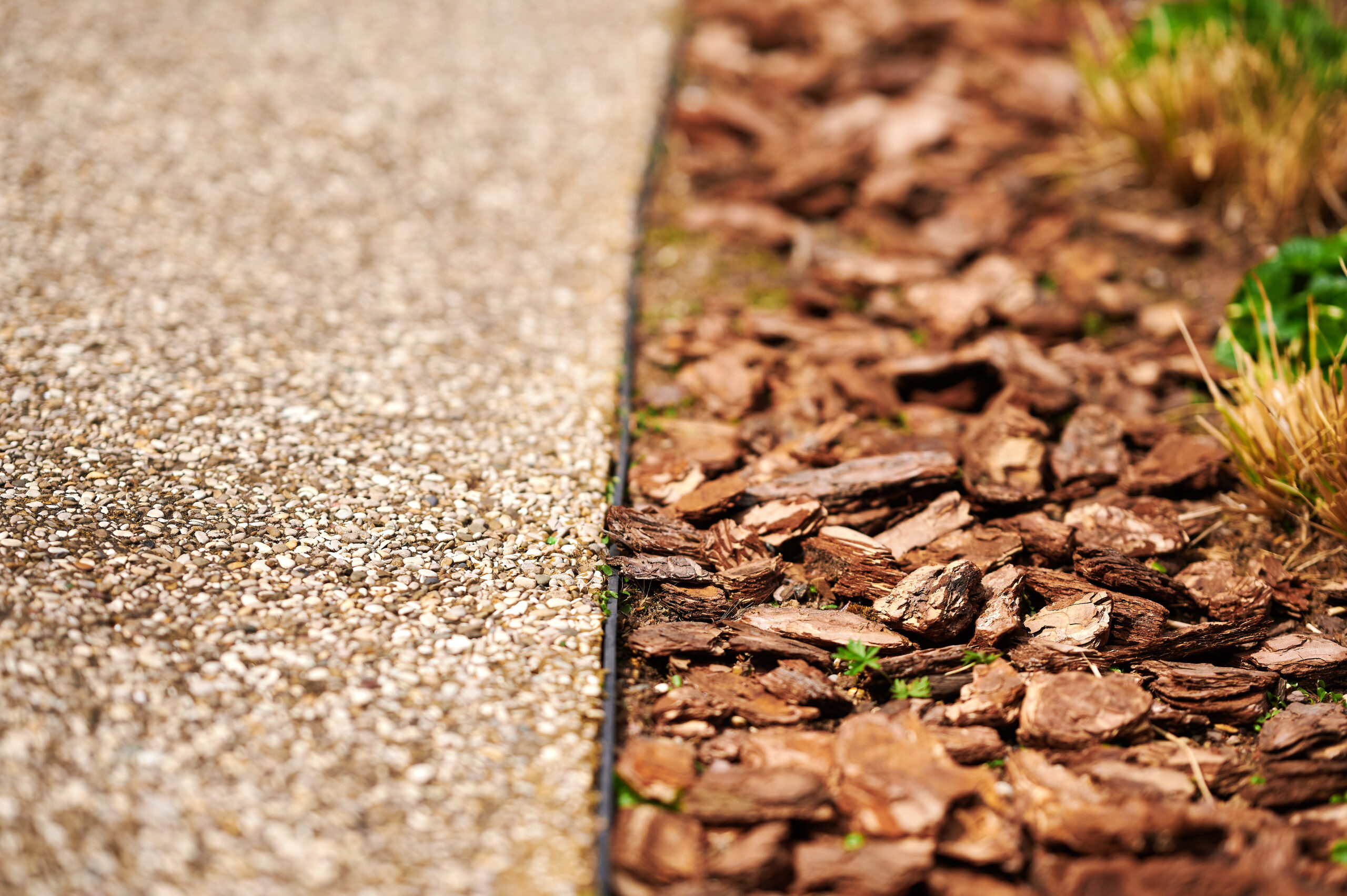
Mulch vs Rock Commercial Landscaping at a Glance
Both materials can look great on day one. The long-term difference shows up in maintenance needs, replacement cycles, and how well each material supports plant growth and overall curb appeal. Here is a quick overview to frame your decision.
- Mulch gives a warm, natural look that supports plant health and improves soil as it breaks down. It usually costs less upfront but needs refreshes every one to two years.
- Decorative rock delivers a clean, modern style with longer lifespan. It has a higher upfront cost and can increase heat around plants if not planned well.
- In Southeastern Wisconsin, freeze-thaw cycles, snow piles, and leaf drop each year should be part of the plan. Ziggy’s Landscape can tailor the material choice to your site conditions, traffic, and budget.
What Is Mulch?
Mulch is an organic groundcover like shredded hardwood, cedar, or dyed wood chips that are spread around plants and trees. It creates a uniform color, regulates soil temperature, and helps retain moisture. Over time it breaks down and enriches soil, which is good for plant roots and long-term plant health.
Benefits of Mulch
- Improves soil health through organic matter
- Insulates plant roots against winter cold and summer heat
- Suppresses weeds by blocking sunlight
- Looks warm and natural, especially with trees, shrubs, and perennials
- Usually lower upfront cost compared to rock
Drawbacks of Mulch
- Fades in color over time and needs top-ups every one to two years
- Can shift during heavy rain or strong winds without proper edging
- May attract pests if placed too thick near buildings or trunks
- Can wash onto sidewalks or parking lots without good borders
What Is Decorative Rock?
Decorative rock includes river rock, granite chips, trap rock, and gravel in a range of sizes and colors. It gives a clean, structured look and can last many years. It is dense and resists wind and water movement when installed correctly with a stable base and high-quality fabric.
Benefits of Rock
- Long-lasting color and shape with minimal fading
- Low replacement frequency compared to mulch
- Clean, modern appearance that suits commercial entries and signs
- Less likely to blow away or wash out when properly edged
- Can deter some pests and reduce maintenance where plant beds are sparse
Drawbacks of Rock
- Higher initial cost for materials and installation
- Can hold heat and stress plants during hot spells
- Leaves and debris are tougher to remove from rock beds
- Hard to adjust or plant into later without moving stone
- Poor quality weed fabric under rock can fail, leading to weeds that are harder to pull
Which Looks Better Long-Term?
This is the core of mulch vs rock commercial landscaping. The right answer depends on your property style, sunlight, traffic, and how much maintenance you can support.
Mulch and Visual Appeal Over Time
Fresh mulch looks rich and deep in color. Over months, sun and rain fade it. In the Midwest, color refresh is often needed every year or two. The upside is that a quick top-dress brings back that fresh, uniform look. If you have a lot of shrubs, perennials, and trees, mulch frames plants nicely and helps them thrive. Plant vigor boosts curb appeal on its own. Well-fed plants reduce gaps and bare spots, so the bed looks fuller with time.
Rock and Visual Appeal Over Time
Rock maintains color better. It works well with modern architecture, high-traffic entries, and areas with simple plantings. Over time, dust, leaves, and seeds collect in the gaps. If debris sits, weeds can root in the organic layer and become visible. A yearly or twice yearly cleanup is key to keeping rock beds crisp. When kept clean, rock beds can look sharp for many years, especially around signs and walkways.
Total Cost of Ownership
Initial price tells only part of the story. Consider purchase, installation, maintenance, and replacement over five to ten years.
Mulch Cost Profile
- Lower material cost per yard
- Lower labor for top-dressing and touch-ups
- Recurring refresh every one to two years to maintain color and depth
- Indirect savings from improved plant health and moisture retention
Rock Cost Profile
- Higher material and delivery cost
- Higher labor at the start due to excavation, base prep, and fabric
- Less frequent replacement, but periodic cleaning is needed
- Potential additional irrigation or plant selection adjustments due to heat
In many commercial settings, mulch is less expensive over the short term while rock can even out over a longer timeline if you keep beds simple and debris under control. Ziggy’s Landscape can price both options for your site and project the five-year cost so you can plan confidently.
Maintenance Needs and Schedules
Mulch Maintenance
- Top-dress 1 to 2 inches annually or every other year to keep a 2 to 3 inch total depth
- Pulled-back mulch around trunks and building edges to avoid moisture problems
- Weed inspections during growing season
- Spring and fall clean-ups remove leaves before they mat into the mulch
Rock Maintenance
- Spring and fall clean-ups are critical to remove leaves and litter
- Spot weeding as needed, especially where seeds settle
- Occasional raking to even out stone and uncover buried fabric edges
- Periodic top-off after settlement or if stones migrate
Ziggy’s Landscape offers maintenance plans built for busy property managers. We align service timing with your business hours and seasonal needs so the site stays neat without interruptions.
Plant Health and Performance
Plants are the heart of curb appeal. The groundcover you choose can help or hinder their growth.
Mulch Supports Healthier Roots
Mulch keeps soil moisture steady, reduces temperature swings, and adds organic matter. That means stronger roots and fewer stress symptoms, especially during heat or drought. Healthier plants resist pests and look fuller.
Rock Requires Careful Plant Selection
Rock raises temperatures around plant crowns and can reflect heat onto leaves. In sunny areas, choose heat-tolerant shrubs and ornamental grasses. Drip irrigation under rock can help. If you want delicate perennials or shade-loving plants to shine, mulch is often the safer choice.
Drainage and Erosion Control
In Southeastern Wisconsin, spring thaw and heavy rains can challenge beds. Both materials can work if installed properly with the right grading.
Mulch and Moisture Management
Mulch absorbs and slows water, then releases it into the soil. In sloped beds, shredded hardwood resists movement better than large chips. Proper edging helps prevent washout. Ziggy’s Landscape also offers finish grading to direct water away from buildings and keep beds stable.
Rock and Runoff
Rock allows water to pass through quickly. With a stable base and quality fabric, it resists erosion. On steep slopes or near downspouts, rock can be a smart choice. Pairing rock channels with mulched plant beds balances function and appearance.
Seasonal Realities in Southeastern Wisconsin
Winter and fall matter as much as summer when you manage a commercial landscape.
- Snow removal: Plows and blowers can push rock onto turf or pavement. Mulch is lighter and less likely to damage equipment, but it can scatter. Good edging and snow staging plans prevent messes. Ziggy’s Landscape provides snow removal and knows how to protect beds during winter service.
- Salt exposure: Salt damages many plants. Rock can handle salt splash better near sidewalks and parking stalls, but plants behind the rock still need protection. Mulch may hold salty water near roots if beds are low. Smart grading and salt-tolerant plant choices help.
- Leaf drop: Mulch absorbs and hides small debris. Rock traps leaves, which can break down into a weed-friendly layer. Regular fall clean-ups are essential for rock beds.
Curb Appeal and Brand Image
First impressions matter. Your groundcover can reinforce your brand tone.
- Mulch signals natural, welcoming, and plant-forward. It fits healthcare, schools, parks, and residential communities.
- Rock communicates modern, clean, and low-clutter. It fits tech campuses, retail pads, industrial parks, and signage zones.
Ziggy’s Landscape often blends both. For example, rock at the monument sign and building perimeter for a crisp frame, then mulch in planting beds for healthier shrubs and a softer feel. This hybrid approach gives a unified look with practical performance.
Common Mistakes to Avoid
- Skipping edging: Without a defined border, both mulch and rock migrate. Steel, concrete, or quality poly edging keeps lines straight.
- Too much mulch: More than 3 inches can suffocate roots or invite pests. Keep it 2 to 3 inches and clear the flare of tree trunks.
- Poor weed fabric under rock: Cheap fabric tears and allows weeds. Use professional-grade fabric and proper overlap.
- Ignoring drainage: Water that pools in beds leads to rot or ice. Ask for finish grading before installation.
- Wrong plant pairing: Shade plants in hot rock beds struggle. Choose plants for the microclimate created by the groundcover.
Where Each Material Works Best
Best Uses for Mulch
- Foundation plantings with shrubs and perennials
- Shade beds under mature trees
- Rain gardens and bioswales that benefit from organic matter
- Beds that need frequent plant adjustments or seasonal color
Best Uses for Rock
- Signage beds and entry monuments
- Perimeter strips along buildings where irrigation is limited
- Drainage channels and downspout splash zones
- High-visibility areas that need a clean, structured look
Sustainability Considerations
Mulch is renewable and feeds the soil, which supports long-term plant health and reduces fertilizer needs. Rock is durable and reduces replacement waste but requires quarrying and transport. The best sustainable move is to plan a design that lasts. That means the right material in the right place. Ziggy’s Landscape can evaluate site conditions to reduce water use, prevent erosion, and keep plants thriving with fewer inputs.
Installation Tips That Pay Off
- Prep the bed: Remove weeds and roots, correct grade, and smooth the surface.
- Edge with intent: Use steel, paver, or concrete borders for straight, durable lines.
- Set depth: Aim for 2 to 3 inches of mulch or a similar depth of rock for coverage without issues.
- Fabric only under rock: Skip landscape fabric under mulch so organic matter can improve soil. Use professional fabric under rock for weed control.
- Plan irrigation: Drip lines under mulch work well. If using rock, ensure emitters sit below the stone.
- Phase the work: Install hardscape and edging first, then plantings, then groundcover for the cleanest finish.
Real-World Scenarios
Office Park Entry
Goal: sharp, low-touch appearance. Solution: rock around the monument sign and walkways for a crisp frame, paired with heat-tolerant shrubs and grasses. Mulch in deeper beds away from pavement for plant health and color contrast. Result: clean lines with lower maintenance near traffic and healthy plantings that soften the space.
Healthcare Campus
Goal: welcoming, natural, calm spaces. Solution: mulch throughout most plant beds to support perennials and shrubs, with rock only where salt and snow loads make mulch impractical. Result: warmer aesthetic and healthier plantings that align with a healing environment.
Retail Pad Near Busy Road
Goal: durability against dust and salt. Solution: decorative rock at the perimeter and near curb lines, mulch in protected interior beds. Result: reduced blow-off, fewer washouts, and manageable long-term costs.
How to Decide for Your Property
- Identify priorities: lower upfront cost, lowest maintenance, or strongest plant performance.
- Map microclimates: sun, shade, wind, heat from pavement, and snow storage zones.
- Assess traffic: foot traffic, equipment movement, and exposure to salt or debris.
- Choose materials bed by bed: many sites benefit from a thoughtful mix.
- Set a maintenance plan: schedule clean-ups, top-dressing, and weeding.
- Review annually: adjust materials in problem spots to keep curb appeal high.
FAQs on Mulch vs Rock Commercial Landscaping
Does rock always cost less in the long run?
Not always. If debris builds up and weeds take root, rock beds can require more labor than expected. In simple, low-debris areas, rock can be cost-effective over five to ten years.
How often should mulch be refreshed?
In our climate, plan for top-dressing every one to two years to keep color and function. Heavily shaded or protected areas may stretch longer. High-sun, high-traffic beds benefit from annual touch-ups.
Will mulch attract pests?
Mulch placed too thick or piled against structures can harbor pests. Keep depth to 2 to 3 inches and maintain clearance around foundations and tree trunks.
Can I switch from mulch to rock later?
Yes, but it requires removing mulch, installing fabric and edging, and choosing plants that handle higher heat. Ziggy’s Landscape can handle the conversion in phases to control budget and downtime.
What color should I choose?
Match your building materials and brand. Dark brown mulch is versatile and natural. River rock blends with many palettes. Gray or black trap rock pairs well with modern architecture. Consistency across beds is key to a polished look.
Our Recommendation
For most commercial sites in Southeastern Wisconsin, a blended strategy delivers the best long-term look and value. Use rock where durability and crisp edges matter most. Use mulch where plant health and a welcoming feel take priority. This approach balances cost, maintenance, and lasting curb appeal.
Work With Ziggy’s Landscape
Ziggy’s Landscape designs, installs, and maintains commercial landscapes across Walworth and Jefferson counties. Our team handles everything from new lawn installation and mulch application to finish grading, seasonal clean-ups, and winter snow removal. We build plans around your goals and budget, so your site stays attractive and easy to manage through every season.
Ready to compare mulch vs rock commercial landscaping for your property? Contact Ziggy’s Landscape for a site assessment and a clear five-year plan. We will show you where each material makes sense, how to keep plants thriving, and what it will cost to maintain the look you want. Let us help you create a landscape that works as hard as your business does.